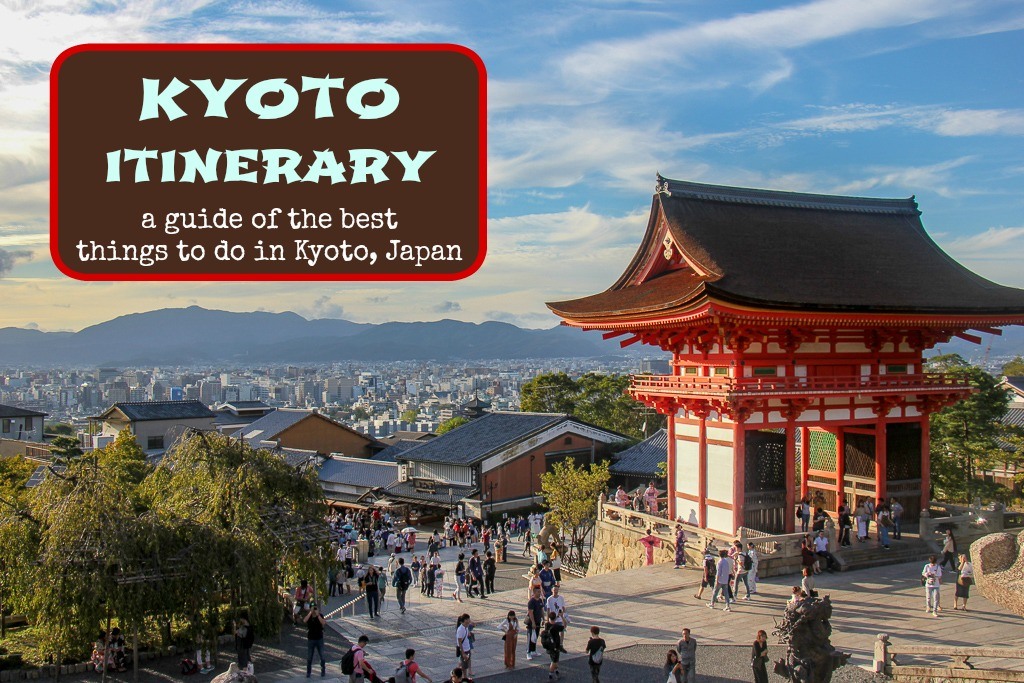
Planning an itinerary for 3 days in Kyoto, Japan can be a monumental task. From visiting temples and lush gardens to eating local cuisine and going Geisha-spotting, there’s an astounding number of things to do in Kyoto!
Additionally, while navigating to Kyoto must-see sights, visitors are faced with a sprawling city and a seemingly incomprehensible language. No need to stress!
Our site utilizes Affiliate Links. If you use them to make a purchase, we may earn a commission. For more information, read our Disclosure Policy.
Our detailed 3 Days in Kyoto Itinerary features an outlined, day-by-day trip plan, plus we share top travel tips gleaned from our personal experience.
3 Days in Kyoto Itinerary Summary
Kyoto was the first stop on our Japan Itinerary – and we didn’t want to miss a thing!
Day 1 covers the most iconic sights in the city center. In the evening, feast at the city’s best market and pop into a few fun Kyoto bars.
On the second day, discover the famous Arashiyama District, visit the city’s most elaborate temple and stroll the grounds of the Imperial Palace. At night, enjoy conveyor belt sushi and get an elevated view of Kyoto.
The final day features more renowned temples and shrines. End the day in the Gion district (where you might spot Geisha) and eat dinner on the prominent Pontocho Street.
Travel Tip: We have created a helpful Kyoto Map of Sights, which is at the end of the itinerary.
Keep Your Japan Trip Organized
As you make plans for your vacation to Japan, organization is key. Stay on top of all the details with our Travel Planning Printables!

Kyoto Itinerary 3 Days

Alright, now let’s dive into our Kyoto trip itinerary for 3 days. More essential information – like where to stay, day trips and our honest Kyoto travel tips – are provided at the end of the article.
Save, Pin or Bookmark our Kyoto Travel Guide to plan your Japan vacation!
DAY 1 in Kyoto

On the first day of your Kyoto Travel Itinerary, see the sights in downtown, including temples, shrines, gardens, a museum and a fabulous market.
Rengeoin Sanjusangendo Temple

Rengeoin Sanjusangendo is one of the best temples in Kyoto. Founded in the year 1164, the site features 1,001 statues of Kannon, the goddess of mercy.
Kyoto National Museum
The Kyoto National Museum features art and ancient artifacts. Unfortunately, it was closed during our visit due to typhoon damage, but is one of the top Kyoto points of interest.
Alternatively: Visit the International Manga Museum featuring Japanese comic books.
Toyokuni Jinja Shrine
Just north of the Kyoto National Museum is the Toyokuni Jinja Shrine. Built in 1599, it is the final resting place of warrior Toyotomi Hideyoshi.
Shosei-en Garden (Kikoku tei Mansion)

The somewhat-hidden Shoseien Kyoto Japanese Garden features a pond, bridges and historic structures. It belongs to the Higashi Honganji Temple, which is where you will be heading after a quick lunch.
Convenience Store Lunch
The first day of your Three Day Kyoto Itinerary is a busy one – so it’s best to eat on the go. Make like the locals and grab a quick meal.
Japanese convenience stores – like 7-11, Lawson, FamilyMart and MiniStop – are called konbini and they stock popular takeaway foods, like rice balls, pork buns and sandwiches.
Higashi Honganji Buddhist Temple

Higashi Honganji (East Honganji) was built in 1602 and the main hall is the largest wooden structure in Kyoto.
Within the complex is a mausoleum dedicated to the founder of Shin Buddhism Sect and an ornate hall decorated in gold leaf.
Nishi Honganji Buddhist Temple
Just to the west of Higashi Honganji is Nishi Honganji – or West Honganji. It was built 11 years before Higashi Honganji in 1591. The temple, which is the headquarters of Jodo Shinshu, is a UNESCO World Heritage Site.
Nijo Castle

Located less than 2 miles north of Nishi Honganji Temple is Nijo Castle. Built in 1603 as the residence of the first shogun of the Edo period, it is also a UNESCO Site.
Dinner at Nishiki Market Kyoto

End your first day of sightseeing at the famous Nishiki Market. The long, covered walkway features more than 100 food stalls selling everything from seafood on a stick to sweet pastries shaped like animals.
Foodie Tip: Consider joining one of the popular Nishiki Market Walking Food Tours.
For a contrasting option (and cheap Kyoto eats), check out the basement at nearby Daimaru. Throughout Japan, mall food courts are a great place to find inexpensive local food on the go, like bento boxes.
Kyoto Bars

One of the fun things to do in Kyoto is going to the bars – and there are a few that we highly recommend visiting! For craft beer, check out Bungalow or for a local standing bar experience, go to Hyaku.
DAY 2 in Kyoto

Today discover three of the best places in Kyoto: Arashiyama, Kinkakuji Temple and the Imperial Palace. Note that these sights require both public transit and a fair amount of walking.
Arashiyama District
Home to many Kyoto top sights, like the Bamboo Forest, Okochi-Sanso Villa Gardens and quaint temples, Arashiyama is a must-see.
There’s enough to see here for a full day, but since we are trying to fit as much as possible, we suggest visiting the highlights outlined below.
Alternatively: Join a guided Arashiyama Tour of sights and food.
To Get to Arashiyama: From Kyoto Station, take the JR Sagano Line to Saga-Arashiyama. From there, all of the sights are within walking distance.
Arashiyama Bamboo Forest

Walking through the Bamboo Forest in Arashiyama is one of the most popular Kyoto activities. The paved path through the towering bamboo is just a short stroll from the train station.
The trail gets extremely crowded later in the day, so make a point to visit early in the morning.
Okochi-Sanso Villa Gardens
Near the west end of the Bamboo Forest is the opulent Okochi-Sanso Villa Gardens. The luxurious estate was once owned by a famous film actor, Okochi Denjiro, but is now open to the public.
Key features of the grounds include the lush gardens, a viewpoint overlooking the city and a teahouse where guests are treated to complimentary matcha and a sweet.
Kameyama-Koen Park

To the south of the villa gardens is the hilltop Kameyama-Koen Park, that overlooks the Katsura River.
Paths weave through the space to an incredible lookouts – and while many tourists don’t visit this green space, monkeys often do!
Gioji Temple

Walk north – passing by Jokakkoji, Rakushisha and Nisonin Temples – to Gioji Temple. The small religious site sits in a moss-covered forest and looks absolutely magical!
Saga Toriimoto Preserved Street

The historic Saga Toriimoto lane dates to the Meiji Period and is lined with traditional Machiya houses. Now mostly occupied by shops and restaurants, it’s still a lovely area to meander through.
Adashino Nenbutsuji Temple

From Saga Toriimoto, veer to the left at the Y-intersection to Adashino Nenbutsuji Temple. The site commemorates the souls of those who have died without family or kin.
At the center of the temple grounds is a field of 8,000 stone statues for the nearly-forgotten deceased.
Arashiyama Station & Kimono Forest

By mid-day, make your way to the Arashiyama Station, which is different from the Saga Arashiyama Station that you arrived at in the morning.
Before leaving, consider walking through the Kimono Forest of Fabric. Each pillar displays a patterned textile used to make traditional clothing.
Then, hop aboard the classic Keifuku Tram for a ride through the suburbs to our recommended lunch spot, Okonomiyaki Katsu.
First go 5 stops to Katabiranotsuji, then transfer to the Kitano Hakubaicho Line to Ryoanji Station. Pay on your final exit at Ryoanji with cash or transportation card (but not JR Passes).
Okonomiyaki Katsu for Lunch

For lunch, wander through the neighborhood from the tram station to find Okonomiyaki Katsu.
Once somewhat of a hidden gem, the small, friendly family-run restaurant is a must for visitors who crave unique experiences.
Order their specialty: Okonomiyaki – a Japanese savory pancake filled with meat or vegetables. If you are lucky enough to get a seat at the grill, your meal will be prepared right in front of you!
Ryoanji Temple
This neighborhood Zen temple is well-known for its rock garden, which is said to lead visitors into deep meditation. A lush garden and pond are also on-site at the UNESCO World Heritage temple.
Kinkakuji Temple (Golden Pavilion)

One of the premier Kyoto things to see, Kinkakuji Temple is incredibly picturesque (and always very crowded).
The Golden Pavilion, which is actually covered in gold leaf, sits on a lake creating beautiful reflections on the water. Read more about Kyoto Temples in complete guide.
Pro Tip: Those interested in plants might want to go to the nearby Kyoto Botanical Gardens, as well.
Kyoto Imperial Palace and National Garden

The Imperial Palace of Kyoto dates to the 8th century and served as the residence of the Imperial Family until 1869 when the emperor moved the capital to Tokyo.
Top Tip: Pick up a useful brochure from the information center before exploring the grounds; the palace itself is off limits.
Go’o Shinto Shrine

Just to the west is the Go’o Shinto Shrine. Probably not making most lists of ‘what to visit in Kyoto,’ it is simply fun to see because of its quirkiness.
Featuring numerous pig statues (and even stuffed pigs), the shrine is dedicated to Wake no Kiyomaro, who is said to have had his leg wounds healed by the help of swine.
Kyoto Station
Most visitors pass through Kyoto Train Station multiple times when traveling around the area, but we recommend actually stopping to have a look. Be sure to check out the top floor, which offers stunning views!
Dinner: Musashi Sushi at Kyoto Station
Although it may seem unlikely, some of the best restaurants in Kyoto are in the train station.
The 10th floor features top ramen restaurants, but we recommend eating at Musashi Sushi Train – it’s one of the top Kyoto places to go for conveyor belt sushi.
Alternatively: Join this 5-Star Kyoto Foodie Tour for a guided introduction to local cuisine!
Kyoto Tower
End day 2 on top of the town! Standing 430-feet-tall, the Kyoto Tower platform offers incredible views of the city.
Going to the top after dark is one of the cool things to do in Kyoto at night (but the viewing platform is only open until 9:00pm).
DAY 3 in Kyoto

Finish your 3 days in Kyoto by walking two famous routes – the gate-lined Fushimi Inari Shrine Trail and the Philosopher’s Path. Spend the evening in the Southern Higashiyama Ward and the Gion District.
Fushimi Inari Shrine

The Fushimi Inari Shrine is one of the top Kyoto places to see. However, it’s not the shrine itself that garners so much attention.
What you go to see is the thousands of red torii gates that straddle the path through the Mount Inari forest. The trail is about 2.5 miles long and takes about 2 hours to complete.
Note that the walk from the Fushimi Inari Station to the shrine is lined with vendors and shops, which are a great to pick up a morning snack.
Ginkakuji Temple (Silver Pavilion)

Built in 1482 as a retirement residence for shogun Ashikaga Yoshimasa, the villa was converted into the Zen Ginkakuji Temple in 1490.
Yoshimasa, the grandson of shogun Ashikaga Yoshimitsu, modeled the Silver Pavilion off his grandfather’s retirement villa, The Golden Kinkakuji Temple.
Udon Noodles for Lunch
Omen Ginkaku-ji is a classic noodle shop in Kyoto. The noodles come with dipping sauces and spices and there are a few other menu items, as well.
Try the standard Omen Udon Set for lunch; the friendly and welcoming staff will explain how to eat it!
Tetsugaku no Michi Philosopher’s Path

Following the canal south from Ginkakuji Temple is a stone walkway, better known as Philosopher’s Path.
Lined with cherry trees (which are fantastic for Kyoto cherry blossom viewing in the springtime), it presents the opportunity to take a contemplative or leisurely stroll through the neighborhood.
Heian Shrine
Considered to be one of Kyoto’s new shrines, Heian was built in 1895. There is a large torii gate at the entrance and the grounds are comprised of museums, gardens and traditional buildings.
Optional Kyoto Attractions: MOMAK and Zoo
There are two nearby sights that you may want to include in your Kyoto Sightseeing Itinerary: the MOMAK Museum and the Zoo.
The National Museum of Modern Art of Kyoto (MOMAK) features numerous exhibits, including paintings, sculptures, ceramics, bamboo works and photography.
Modern Japanese art, as well as European and American contemporary art, are also displayed at MOMAK.
The Kyoto City Zoo opened in 1903 and is the second-oldest in Japan. It was recently renovated and its collection of animals include elephants, gorillas, lions, tigers and bears.
Maruyama Park

City center Maruyama Park is popular for the numerous cherry trees that are found throughout it. At the center is the Weeping Cherry Tree (shidarezakura).
Note: The Cherry Blossom Season is usually from late March through the first two weeks of April.
Yasaka Shrine (Gion Shrine)

Founded more than 1,350 years ago, Yasaka Shrine is one of the best sights in Kyoto.
The highlight for many tourists is the stage with giant hanging lanterns. The annual Gion Matsuri Festival also takes place here in July.
Historic Kyoto Streets

As you make your way to the most famous Kyoto temple, be sure to walk along two picturesque streets: Ninenzaka and Sannenzaka Paths.
Lined with ancient dwellings and classic teashops, these lanes are like stepping back in time.
Kiyomizu dera Temple

Founded in the year 778 on the site of a waterfall, the Kiyomizu-dera Temple Complex sprawls over a hillside and into a valley.
The area has several other on-site attractions. In addition to the viewpoint balconies, you can drink water from the falls in hopes your wishes will be granted.
Hanami-Koji Street in Gion District

Famous for the geishas that entertain in the area, Gion is host to numerous restaurants and tea houses. The district is located between Yasaka Shrine and the river.
Not-to-miss streets, where Kyoto geishas are often spotted, are Hanami-Koji Street, Shinjo Avenue and Shirakawa Canal.
Geisha in Kyoto

In Kyoto, geishas are called geiko (a woman of art) and assistants, or geisha-in-training, are called maiko.
In Japanese culture, geiko entertain – by singing, dancing, playing games and making conversation – in traditional tea houses (called ochaya) and old-style houses (called machiya).
The number of geishas in Kyoto are declining, but in Gion there are two geiko communities. They are most likely to be seen in the streets in the evening as they walk to events.
Spotting Geisha is obviously free (but it is severely frowned up to approach, chase or aggressively photograph them), but attending an event is very expensive and exclusive.
Going to a performance is more affordable; book this Geisha Experience – or join this guided walking tour of the Gion after dark.
Dinner and Drinks on Pontocho Street

One of the best Kyoto things to do at night is to stroll along Pontocho Street. The picturesque lane is packed with upscale restaurants and bars – some of which offer riverside seating.
Gyukatsu Kyoto Katsugyu is a top-rated Kyoto restaurant that has a location on Pontocho Alley. Serving classic beef meal sets – including Wagyu – the helpful staff engage with patrons to explain the meal and how to eat it.
After dinner, sample the local Japanese whiskey. Bar Liquor Museum offers a wide selection of whiskey from Japan – in a range of prices. If whiskey is not your jam, sip local craft brew at Beer Bar Miyama 162.

Kyoto Sightseeing Map
Use this Google Map for an interactive version of our Kyoto Tourist Map below.

More Activities for a 3 Day Itinerary in Kyoto

We have outlined our tips of what to see in Kyoto in 3 days. However, we understand that fellow travelers may have different interests, so we are sharing a few more suggestions.
Kimono Rental
For visitors who want to dress in a Japanese kimono, you can rent them for the day. Wearing the traditional garb while sightseeing historic Kyoto creates great photo opportunities!
Kyoto Tours
See the highlights in a single day on a top-rated Kyoto Sightseeing Bus Tour. The route covers a lot of ground – including 7 top attractions and 3 World Heritage Sites!
Traveling around by bicycle is another fun way to discover Kyoto. Join this popular small-group tour, to visit some of the prime spots on two wheels!
There are many more ways to experience Japanese culture. Below are a few of the unique day tours in Kyoto!
Alternatively, take a custom tour with a private guide in Kyoto. Tell them what you are interested in seeing and they will create a 1-day tour of Kyoto just for you!
Kyoto Travel Tips

Now that you know how to do Kyoto in 3 days, it’s time to cover the logistics so you can have an amazing all around experience!
How To Get to Kyoto

If you are flying to Kyoto from another country, the closest airport is the Kansai International Airport in Osaka (KIX).
If you are arriving in Kyoto from another city in Japan, the Osaka Itami Airport (ITM) is actually closer to Kyoto.
Search for the best airfares on Skyscanner – but first, read our Tips for Finding Cheap Flights.
Whether you are flying or taking a train, your first stop in the city will most likely be at Kyoto Station.
To get from Osaka to Kyoto, The Limited Express Haruka (operated by JR West) takes an hour and 15 minutes.
If you are traveling from Tokyo to Kyoto, the best option is probably to fly to Itami and then take the train to Kyoto. However, you can also take the The Shinkansen (Bullet Train).
How To Get around Kyoto

Even though Kyoto is sprawling, it is possible to cover quite a bit of ground by simply walking between destinations.
Using buses in Kyoto is a great way to get around. Within the city, buses charge a flat fee per ride. Beyond the center, you pay by distance.
Fares are paid at the front of the bus with cash (exact change required, machine on board) or pre-loaded transport cards (like SUICA or ICOCA), which require a tap-off when you exit.
There are two subway lines in Kyoto: the Karasuma Line, which runs north-south and the Tozai Line, which travels east-west. Rides are priced by distance and the fare is paid using a travel card.
There are two popular options for transit cards. The JR Pass – or Japan Rail Pass, which is sold by region and can be used on some local transport, and a ICOCA card, which is solely for local transport.
Where To Stay in Kyoto

Offering exceptional value for money, Century Hotel is ideally located at Kyoto Station. Rooms tend to be on the small side (even for Japan), but the breakfast has a range of options and the staff is friendly.
Although often lacking modern conveniences, staying at a traditional Ryokan offers an authentic experience and Japanese hospitality. The atmospheric Kyoto Ryokan Kinoe is a highly-rated.
For budget travelers, the Capsule Hotel Anshin Oyado Premium offers pods with televisions, shared bathrooms and included breakfast.
What To Pack for a Kyoto Trip

Alright, it’s finally time to discuss what goes in your suitcase or backpack. Grab our FREE Checklist, and let’s get you to Japan!
Durable Travel Shoes
Make sure you pack the right travel shoes for trekking around Kyoto. I wear these NB Trainers and Kris prefers trail shoes by Merrell. Read our reviews on more of the Best Shoes for Travel to find your perfect pair!
Travel Camera
The sights in Kyoto are quite striking. Rather than relying on your phone, upgrade to an actual camera. We travel with a Canon Rebel and an 18-135mm lens.
Day Bag
Our Kyoto 3 Day Travel Plan features long days of touring the city – so it’s best to carry a versatile day pack to stow all of your necessary items.
Looking for a different style? Use our tips for choosing the Best Day Bag for Traveling!
Japan Trip Insurance
No matter how well you prepare, travel goes sideways at times. When luggage gets lost, flights cancel or travelers become ill, insurance could help cover costs.
If you haven’t already obtained coverage, consider traveling protected with World Nomads.
Japan Travel Guides

Visiting more of Japan? Wonderful! Use our honest and free travel guides to plan your best vacation.
- Must-See Kyoto Temples and Shrines
- Ultimate 2 Weeks in Japan
- How To Plan a Tokyo Trip – and Top Tokyo Temples
- Best Tokyo Food – and Fun Bars in Tokyo
- Visiting Mount Fuji and the Five Lakes District
Start planning your trip to Japan! Search for the lowest airfares, the best accommodations and fun things to do…then start packing! Want additional advice? Head over to our Travel Planning Page and for country-specific information, take a look at our Travel Guides Page!

Pin it! See all of our travel pins on our JetSetting Fools Pinterest Board.
